AI Explained
What Is Orbitagents? AI Agents That Manage Your Growth
What it does for your business, what you can do with it, and the story and technology behind it.
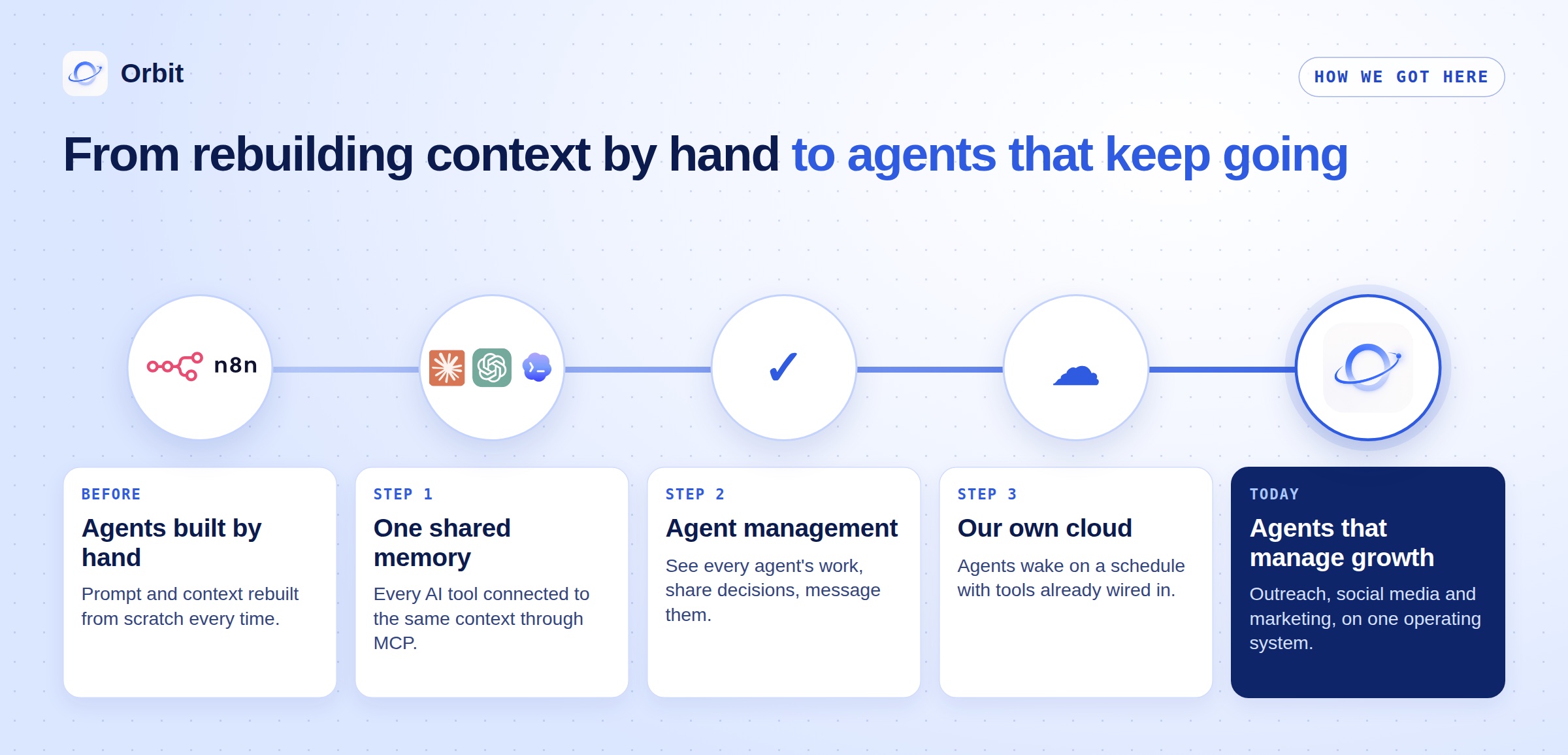
Before we used Claude and the other AI tools, we built our agents by hand in frameworks like n8n. Every time, we had to rebuild the prompt and the context from scratch. What the business does, who it sells to, what had already been decided. All of it, again, for every agent.
When we moved to Claude, ChatGPT and Codex, the same problem came with us. One chat knew our pricing. Another knew our customers. A third knew the product. None of them knew each other, so every morning started from zero. We built a small fix for that, mostly for ourselves.
That small fix turned into something much bigger than we expected.
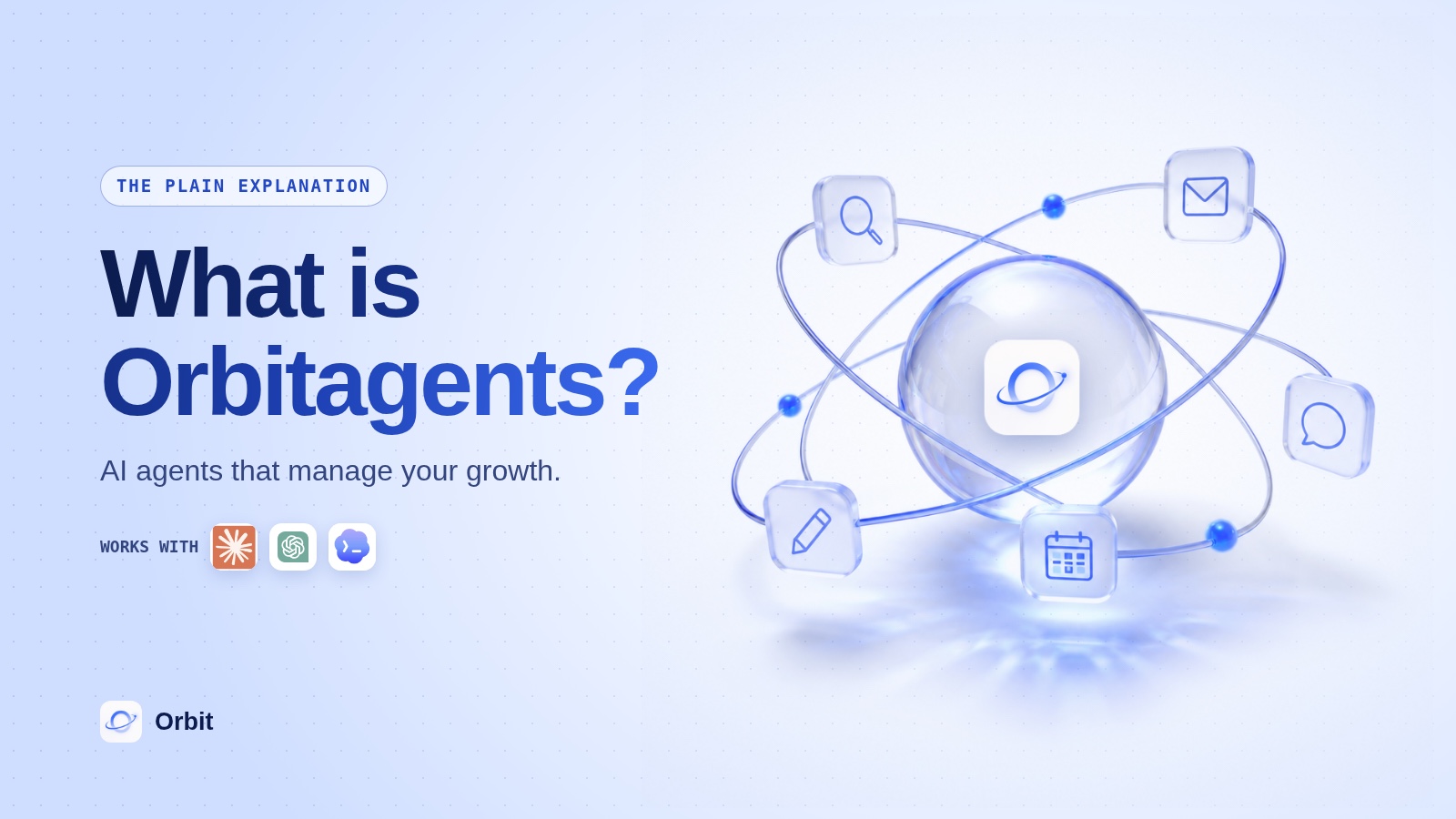
Today, Orbitagents gives your business AI agents that manage your growth. They find your customers, run your outreach, post your social media and keep your marketing moving every day, on their own. You see everything they do, approve what matters, and tell them what to change by replying.
Here is what that means for you, what you can do with it, and how one small fix got us here.
What this means if you run a business
Most founders already use AI every day and still do the work by hand. You open a chat, explain your business again, get a good answer, then copy it somewhere and go do the actual thing yourself. The AI is smart, but it only moves when you do.
Finding customers does not work like that. It is the same small jobs every day: find the right people, write to them, follow up, post, keep track. It only pays off if it keeps happening on the days you are busy, which is every day.
Orbit changes who carries that load.
- Work keeps happening without you. Agents run on a schedule with your laptop closed.
- You stop repeating yourself. Everything your agents know is in one memory, so nobody starts from zero.
- You stop being the integration. Your agents, your accounts and your AI tools all work from the same place.
- You stay the boss. You see what happened, approve what matters, and correct agents by replying to them.
One person can run like ten. Orbit runs your growth and marketing. It does not take your sales calls or deliver your work. That is still you.
What you can do with it
You can start from a ready-made agent, describe your own in a sentence, or just talk to Orbie, your AI CMO. Here is what people do with it today.
- Find customers. Agents find people on LinkedIn, Reddit and X who recently posted about the problem you solve.
- Run outreach. They connect, write and follow up on LinkedIn, and send cold email campaigns.
- Publish content. They write posts in your voice with images for each platform, including an X ghostwriter and a Reddit agent.
- Get daily help. They summarize your inbox and send a meeting brief an hour before each call.
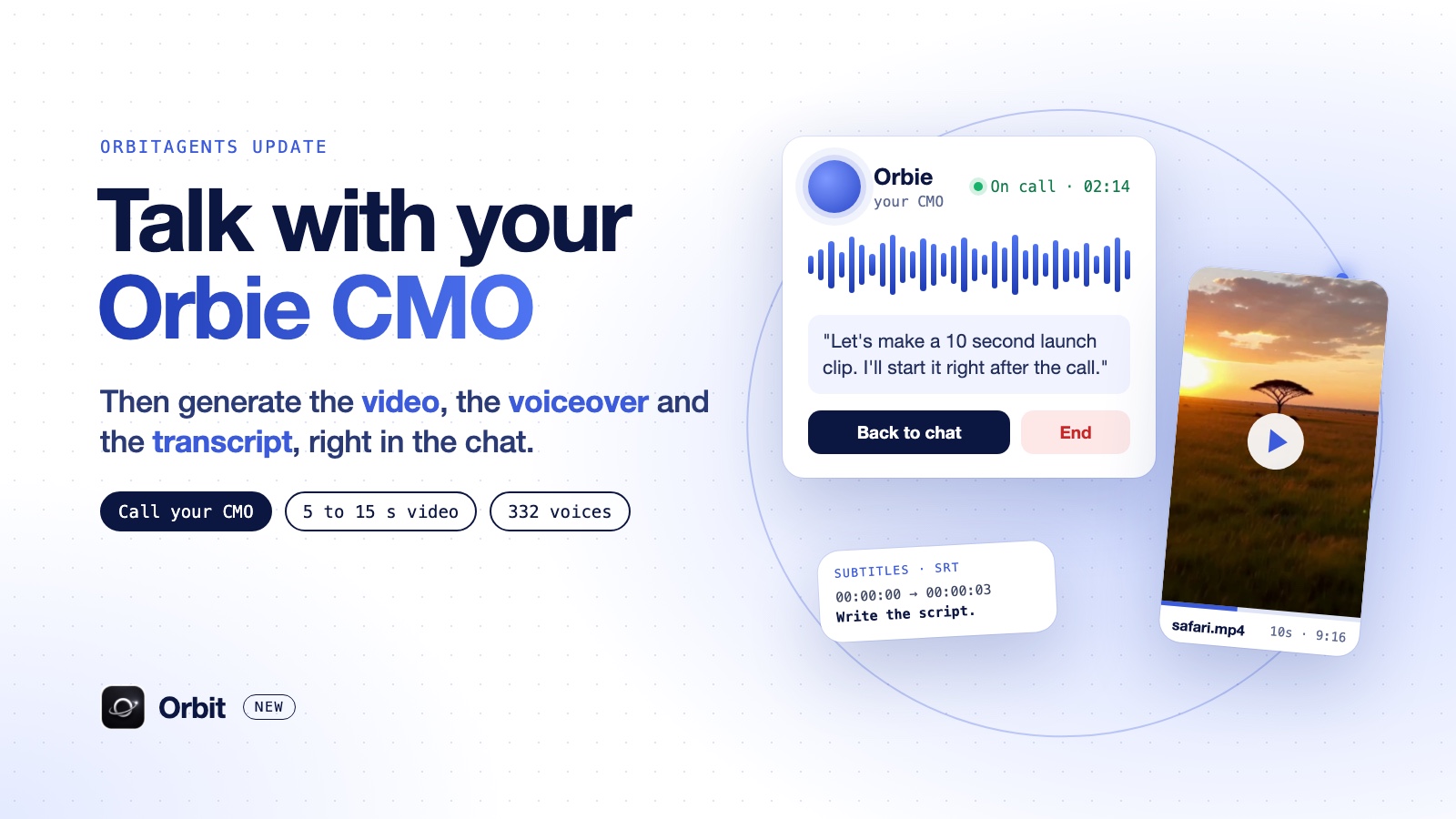
- Talk through strategy. Type to Orbie or call Orbie, agree a plan, and get it moving in the same conversation.
- Build your own. Describe the job and Orbit proposes a name, a goal, a schedule and the tools, then builds it once you agree.
- Connect your AI tools. Claude, ChatGPT, Codex, Cursor, Gemini and others can join the same memory with one link.
- Run it for clients. Agencies get a separate workspace for each client on one shared credit pool.
Getting started takes about a minute. Enter your website, and Orbit reads your business, works out who your buyers are and suggests agents that fit.
How we got here
Back to that small fix. We were using Claude, ChatGPT and Codex side by side, and nothing carried over between them. So we built a shared memory that any AI tool could connect to through MCP, the open standard for plugging AI tools into outside systems. Tell one tool something and the others knew it.
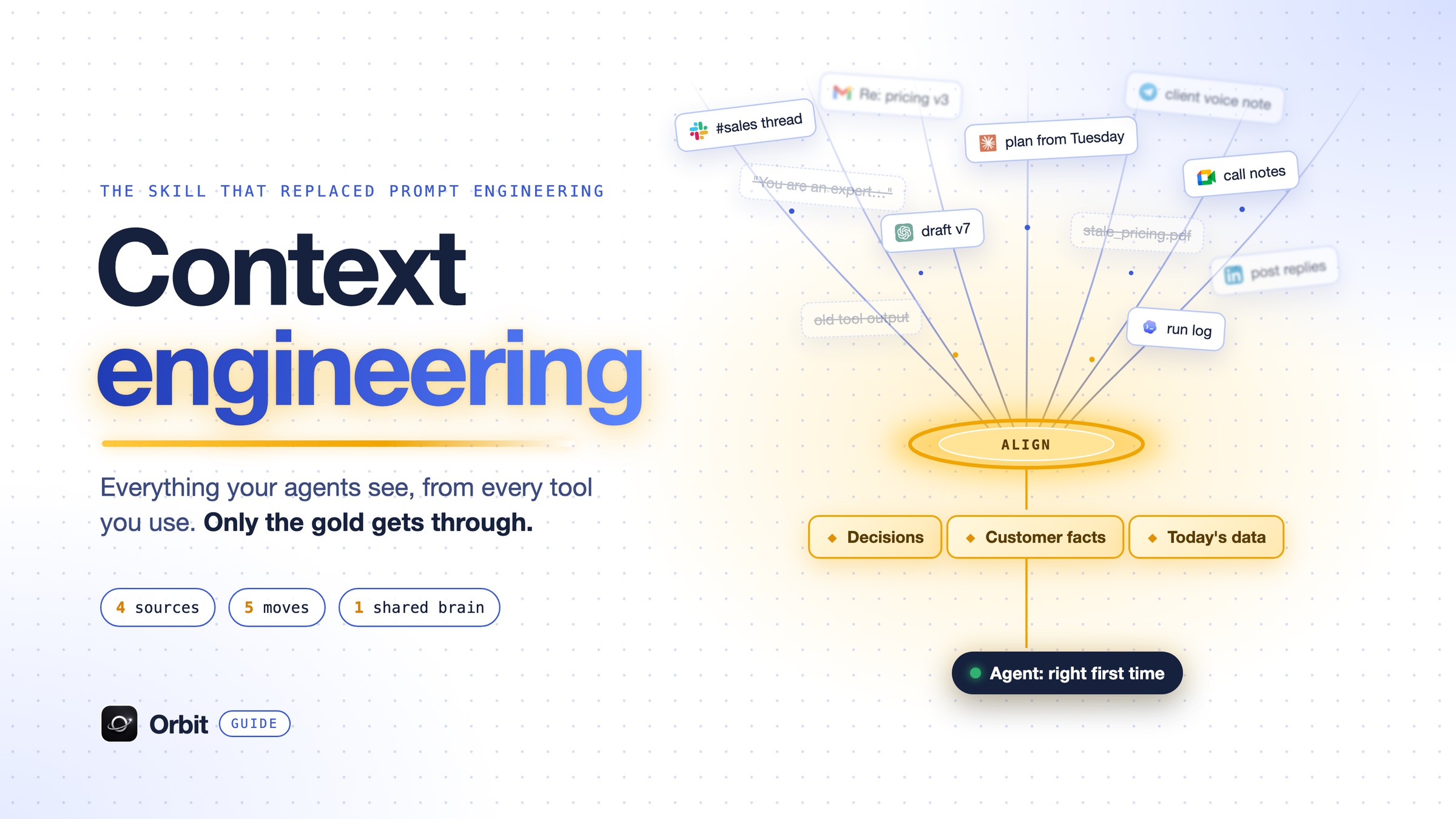
That small thing taught us the most important lesson we have learned. Context is the missing piece, and it always was. The models were already good. What stopped agents from working persistently was everything around the model: they forgot what was decided yesterday, had no idea what the other agent had done, and lost the thread between runs. A smart agent with no context is a new hire on their first day, every day. We wrote a full guide to context engineering on why this decides how well agents work.
Once context was solved, the next problem appeared straight away. People had agents that finally remembered things, and now they had no idea what those agents were doing. So Orbit grew from memory into management. We added one place to see every agent's work, decisions that all agents had to read before acting, and a way to message them.
Then people asked the obvious question: why do I have to keep my own AI session open for this to run? So we built our own place for agents to run, with tools already wired in. An agent could now wake up on a schedule, in our cloud, with no laptop and no API keys. From there the rest followed: connected accounts, workflows, a real browser, a shared CRM, and Orbie on top.
Each step came from the one before it, and they add up to what every serious agent setup ends up needing. That is the agent OS. We did not set out to build one. We followed the context problem until there was nothing left around it to solve.
What powers each part
You never need to think about any of this to use Orbit. But the difference between a demo and something you can trust with your business is what sits underneath, so here is each main part and what makes it work.
A memory all your agents share
What you get: tell Orbit something once and every agent uses it. A decision made on Monday is still there on Friday, in every tool.
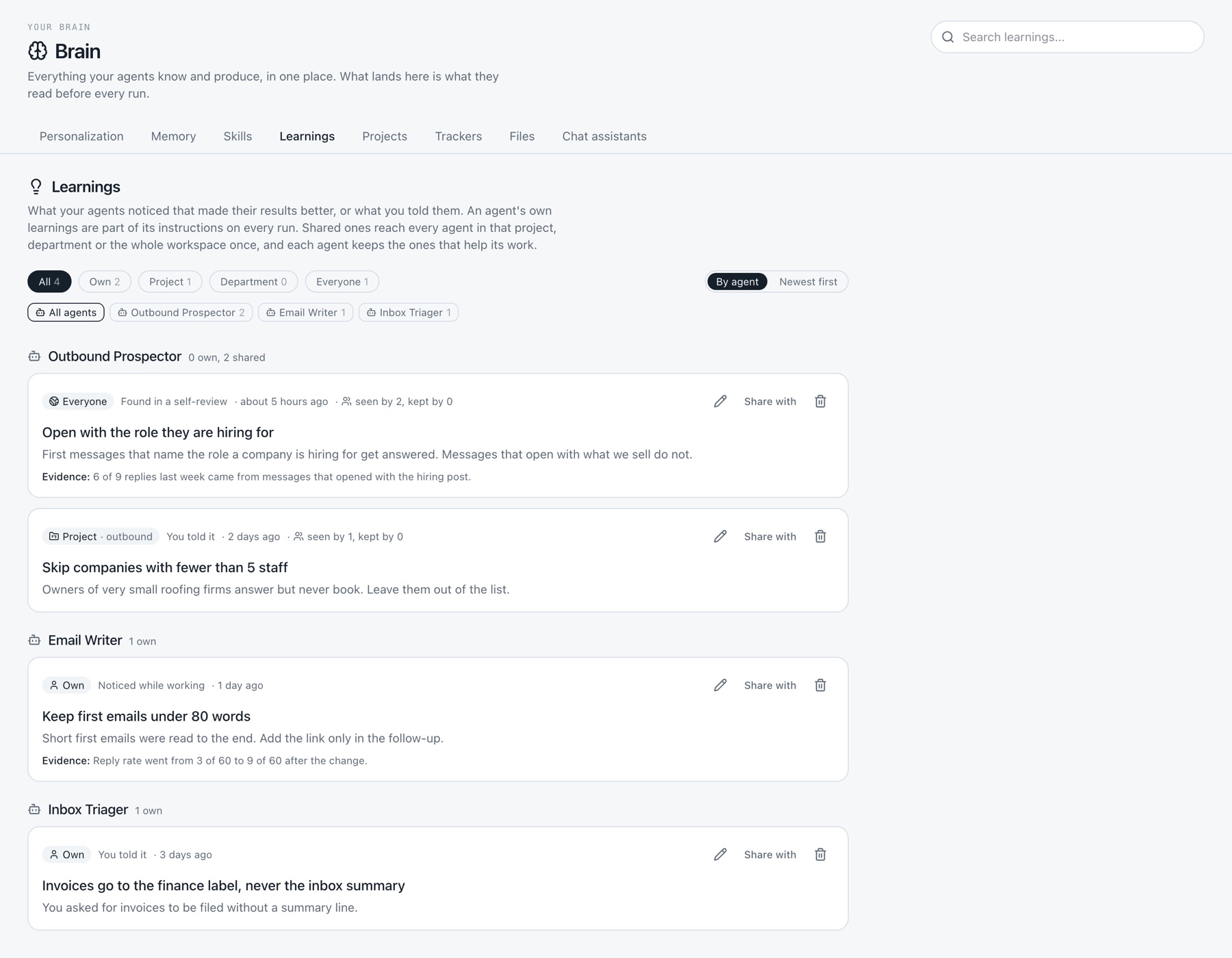
What powers it: a workspace memory searched by both keyword and meaning. Everything is stored with a trust level: ratified Knowledge, finished Reports and rough Notes. Your own edits always outrank an agent's, and a lower-trust agent cannot quietly overwrite a higher-trust fact. Old versions are kept rather than replaced.
Agents that start each run already briefed
What you get: no re-explaining. An agent shows up knowing your company and what was decided.
What powers it: before every run, Orbit assembles a briefing with your company facts, core documents, Knowledge, instructions addressed to that agent, and the memories most relevant to the task. Our decision model picks those memories, so an agent gets the few that change the work instead of everything at once. More context is not better context.
One link for every AI tool
What you get: the work you do in Claude or ChatGPT and the work your agents do stop living in separate places.
What powers it: MCP, the same foundation Orbit started on. You paste one link into your AI tool, with no config files, and it can read and write the same memory, files and trackers your agents use. Each teammate gets their own link, so their work stays labelled.
Agents that run with your laptop closed
What you get: work that happens while you sleep, as in our LinkedIn outbound playbook.
What powers it: Orbit Cloud, our own execution layer. Each run is picked up by a worker that runs the agent, streams every step into a live view and settles the cost at the end. Hard limits on time, tool calls and spend stop a run from going wild.
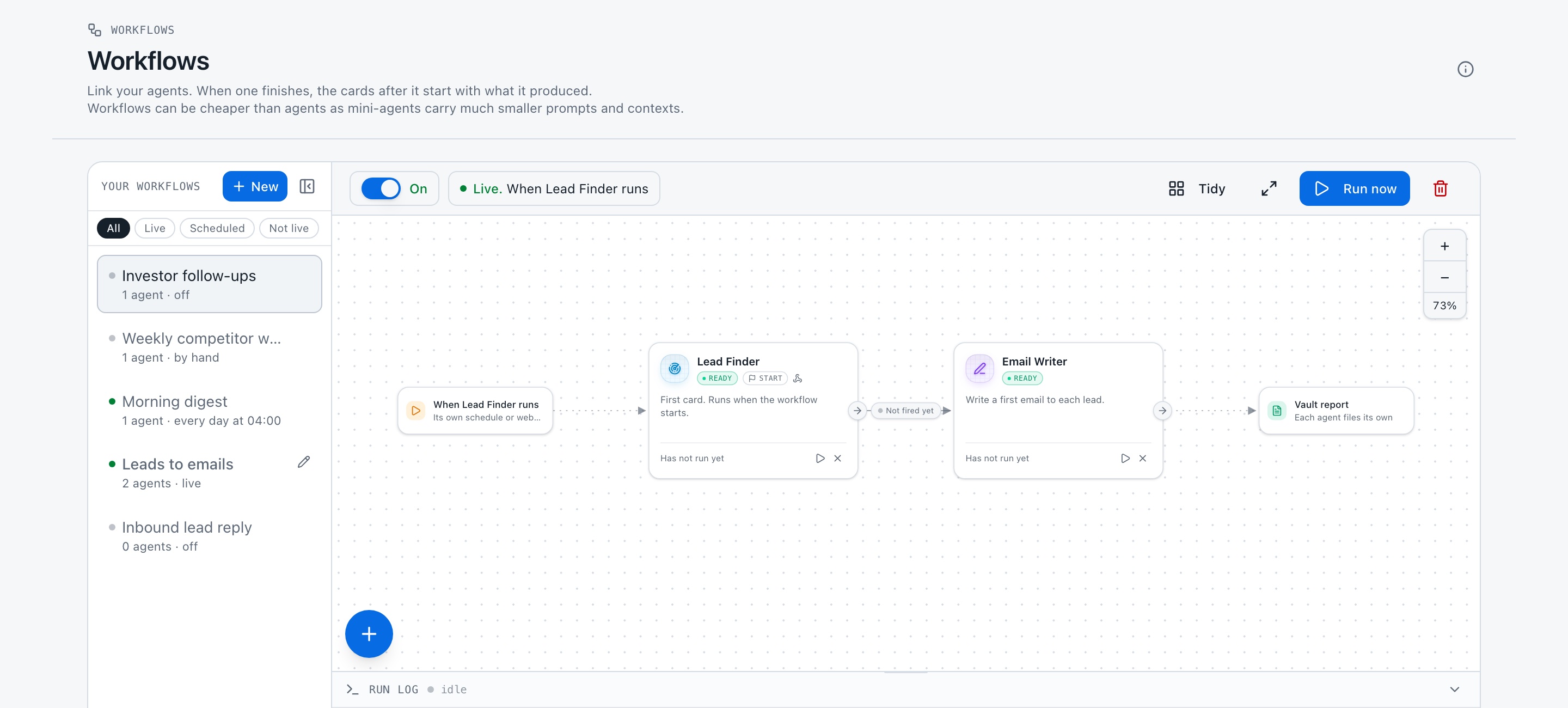
Schedules and workflows
What you get: agents that show up on time and hand work to each other without you relaying it.
What powers it: a scheduler for hourly, daily, weekly, monthly or custom timing, plus webhooks that wake an agent when something happens and chains that start one agent after another. Workflows put those steps on a canvas you can see.
Tools already built in
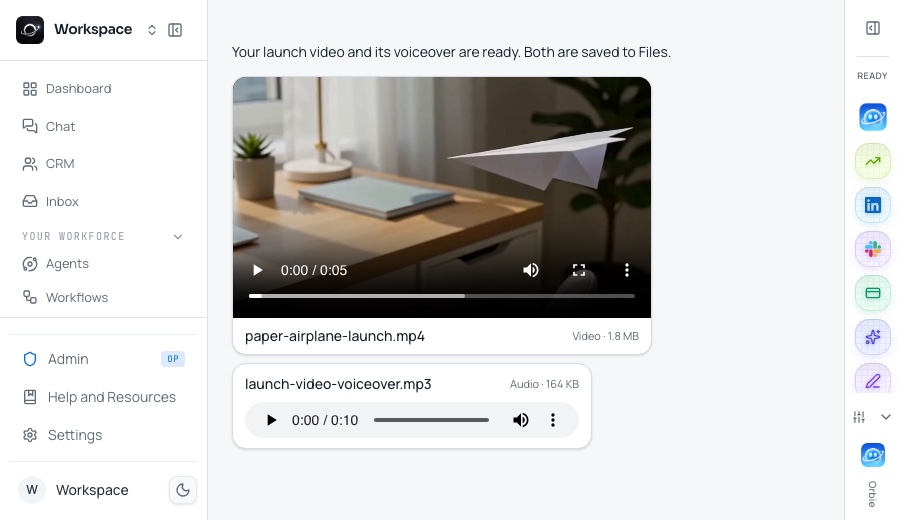
What you get: an agent that can do things from its first run, with no API keys to collect.
What powers it: one toolbox every agent reaches through a single connection, with 49 capabilities, covering lead data from Apollo and LinkedIn, Reddit and X data, web scraping, image, video and voice generation, plus thousands of scrapers. Keys you add yourself are encrypted and only sent to the service they belong to.
Your accounts and a real browser
What you get: agents that act where your customers are: LinkedIn, Gmail, Outlook, WhatsApp, Telegram and more, plus any website with no integration at all.
What powers it: connected accounts with limits per platform, such as 20 LinkedIn invites and 50 messages a day, with pauses between actions and no repeated message within 14 days. For everything else, agents drive a real browser you can watch live, using sign-ins you complete yourself.
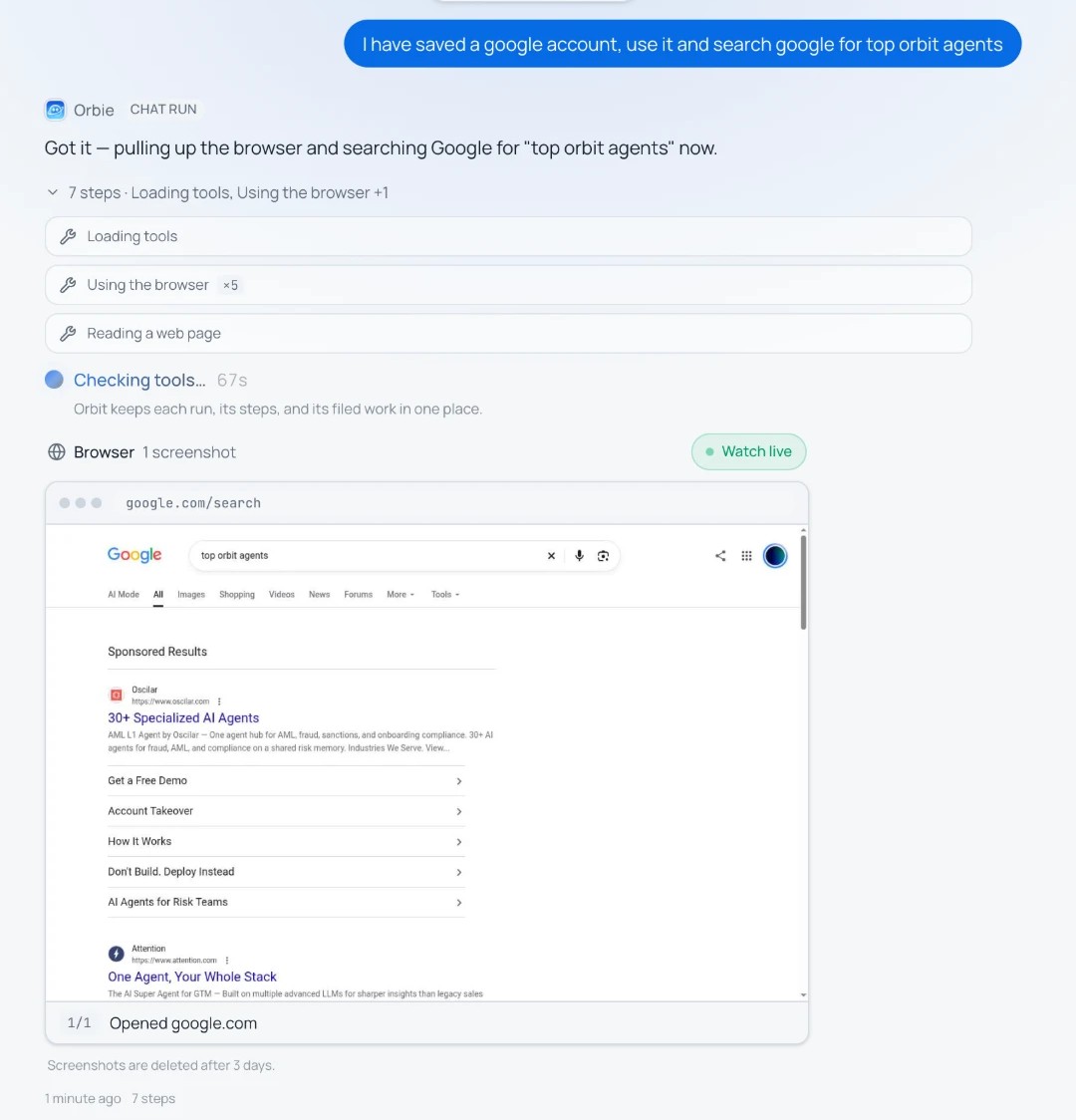
Orbie, your AI CMO
What you get: a marketing lead you can talk to at any time, who tells you what to do next and what it will cost.
What powers it: a briefing on your business, your numbers and your pipeline, loaded into every conversation. Orbie does work directly in the chat and creates a dedicated agent when something should run on a schedule or needs its own focused role. Calls run on the same memory, and the transcript lands back in your chat.
One place to see and control everything
What you get: you open Orbit and see what happened, what needs you and who replied.
What powers it: every agent files its work as it goes. Reports and drafts land in your Inbox, anything waiting on you is marked, finished posts appear on your Calendar, and people from every agent's list land in one CRM with one card per person. When someone replies, they move to Replied. Drafts can wait for your yes before anything is sent.
Built to be trusted
What you get: you can hand over real accounts without losing sleep.
What powers it: each workspace is isolated at the database level. Each run gets a short-lived token tied to that workspace and agent, which is revoked when the run ends. Agents use only the tools and channels you allow, and credentials are stored with AES-256-GCM encryption. No tool can promise a platform will never restrict an account, which is why the limits exist.
Why it fits together
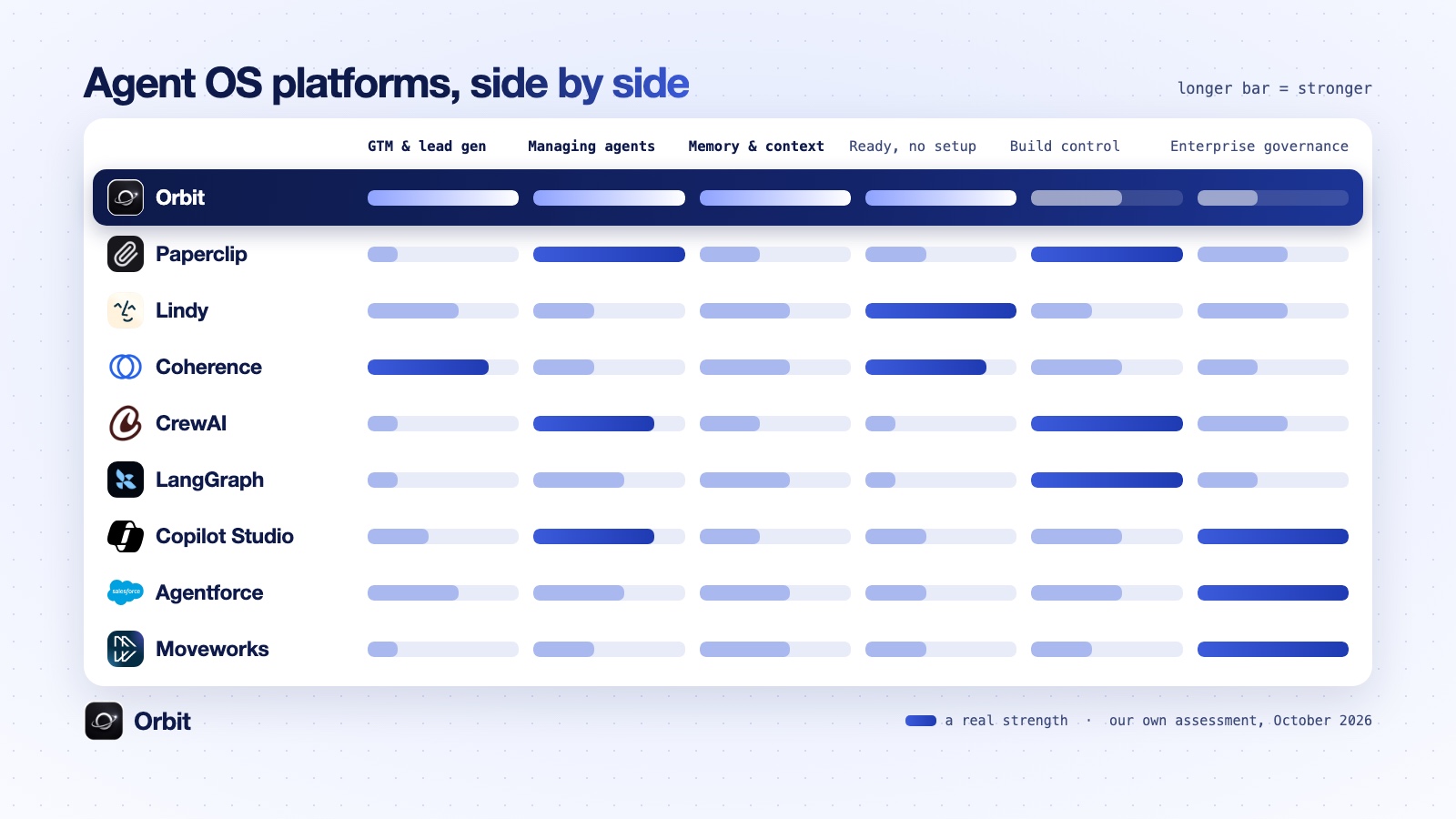
Any one of these parts exists somewhere else. Memory tools remember, automation tools run steps, and chat assistants think. Orbit connects them, so that one correction reaches every agent, a scheduled run starts with the right context, and its results feed the memory for the next run.
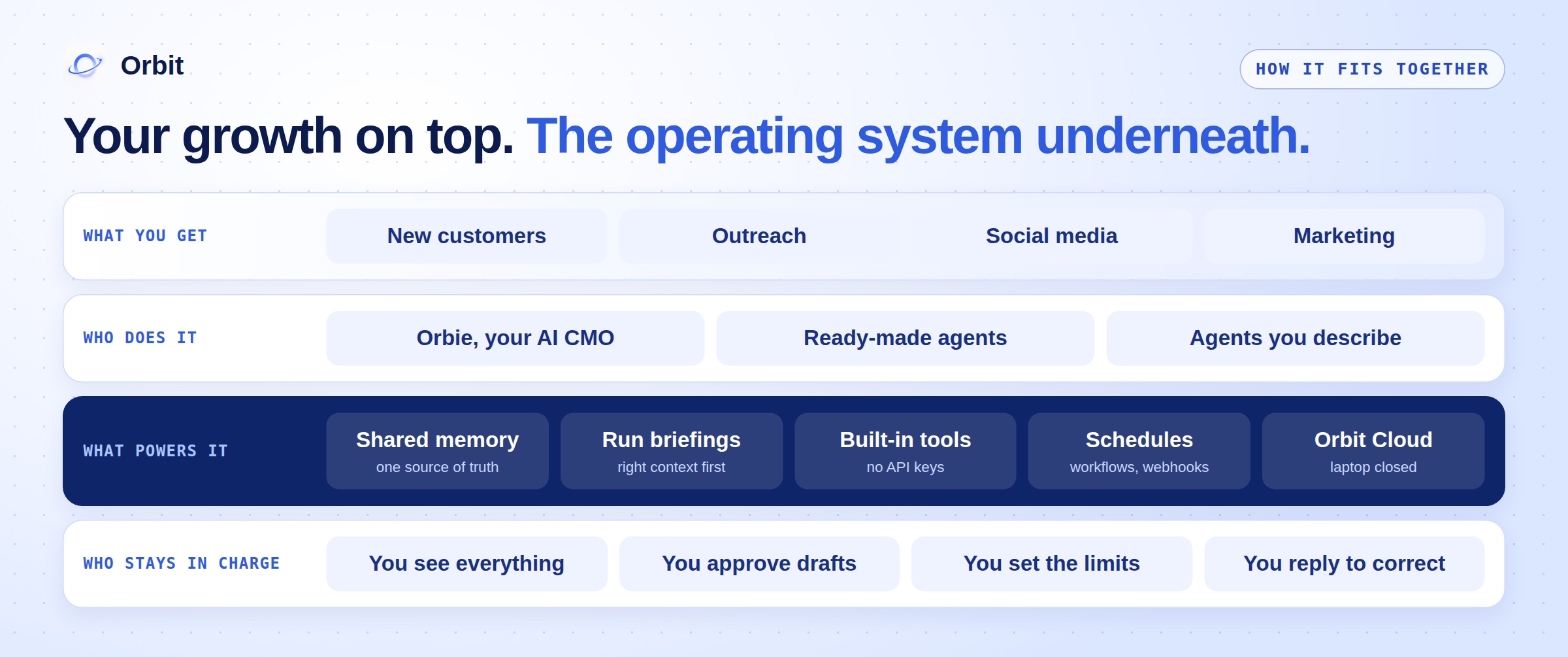
That loop is why agents on Orbit improve the longer you use them. It is also what we use ourselves: our own agents booked 65 meetings in a month, and more than 500 founders, agencies and companies now run agents on Orbit.
Your computer's operating system decides which programs run, what they can access and what happens when one fails. Orbit does the same for your agents. So when someone asks what Orbitagents really is, the answer is simple: it is the operating system for AI agents, and the agents on it manage your growth.
Who it is for
Orbit fits people who need customers and do not have a team to go find them: founders and solo operators, small SaaS teams, and agencies running growth for several clients. It also fits bigger teams that use several AI tools and want them working from one memory. You do not need to be technical. If you can describe the job, you can run the agent.
What it costs
You pay for the work your agents do. Usage is charged at cost, and one credit is half a cent of real usage.
| Plan | Price | What you get |
|---|---|---|
| Free | $0 | 100 credits at signup plus 5 a day, 3 agents |
| Pro | From $29/month | 2,900 credits, 10 agents, more credit steps as you grow |
| Agency | From $49/month | 4,900 credits, client workspaces on one shared pool |
| GTM Partnership | $749/month | 39,900 credits, set up for you, with human GTM support |
Plans are monthly and you can cancel any time. Extra credits are $15 per 1,000 and never expire. Connecting your own accounts like LinkedIn or Gmail needs a paid plan.
Try it
Build the AI empire that runs with you, the operating system for Claude, Codex, ChatGPT and more.
The fastest way to understand it is to watch one agent do one real job. Enter your website, pick the agent closest to what you need, and see what comes back in the first minute. Start free at orbitagents.com.
Frequently asked questions
- What is Orbitagents in one sentence?
- Orbitagents, or Orbit for short, gives your business AI agents that manage your growth, and it is the operating system that runs them.
- Is it a real operating system?
- It does not replace Windows, macOS or your AI model. It sits above them and does for agents what an operating system does for programs: it decides when they run, what they know, what they can reach and what happens when something goes wrong.
- Do I need to be technical?
- No. You enter your website, pick an agent or describe the job, and it starts working. Connecting an AI tool like Claude or ChatGPT is optional and is a copy and paste.
- Do I need a Claude or ChatGPT subscription?
- No. Agents run in Orbit's cloud without them. If you already use those tools, you can connect them so they share the same memory as your agents.
- Will agents send things without me seeing them?
- Only if you want them to. Drafts can wait for your yes before anything is sent, and every agent works within daily limits on each account.
- How much does Orbit cost?
- There is a free plan with 100 credits at signup and 3 agents. Pro starts at $29 a month with 2,900 credits and 10 agents. Agency starts at $49 a month, and the done-with-you GTM Partnership is $749 a month.
Build your autonomous AI company
Orbit gives your AI clients shared memory, provisioned tools and agents that run like trained employees.
Get started free